
How do I prepare my employee data for import into CleanManager?
If you have set up your account to import employee data using file import, this article can guide you through preparing your employee data for import in CleanManager format.
If you are not sure about what file import is and how it works, you can learn more in this article: How does a file import from Excel work?
In this article, you will learn about which employee data you can import and how to set up and prepare your spreadsheet for import in CleanManager:
Employee data that can be imported
In the table, you can see the data you can import in the Column Name column (e.g. Employee ID). In the Data format column, you can see the formatting you can use when entering your employee data (e.g. Letters and numbers (min. 1 character, max. 10 characters)).
In the Example column, you can see an example of the data you can input (e.g. 100).
NOTE:
The Active column is based on whether the employee should be active in your synchronization. If you select no, the employee will not be imported.
If you export employee data from the system, these columns are also included:
Preparing the file for import
You can use your own Excel files that you use to store employee data, or you can use our templates to set up your data before you begin importing employees.
Your own files must be modified to have the same column names and values in the rows as you see in the table in the section Employee data that can be imported.
The order of your columns does not affect your import, but it is important that the column names are spelled correctly, including capitalization. Otherwise, you will encounter errors during your import.
Spreadsheet templates:
You can download our templates that you can use to set up your employee data, and subsequently save and use for your import:


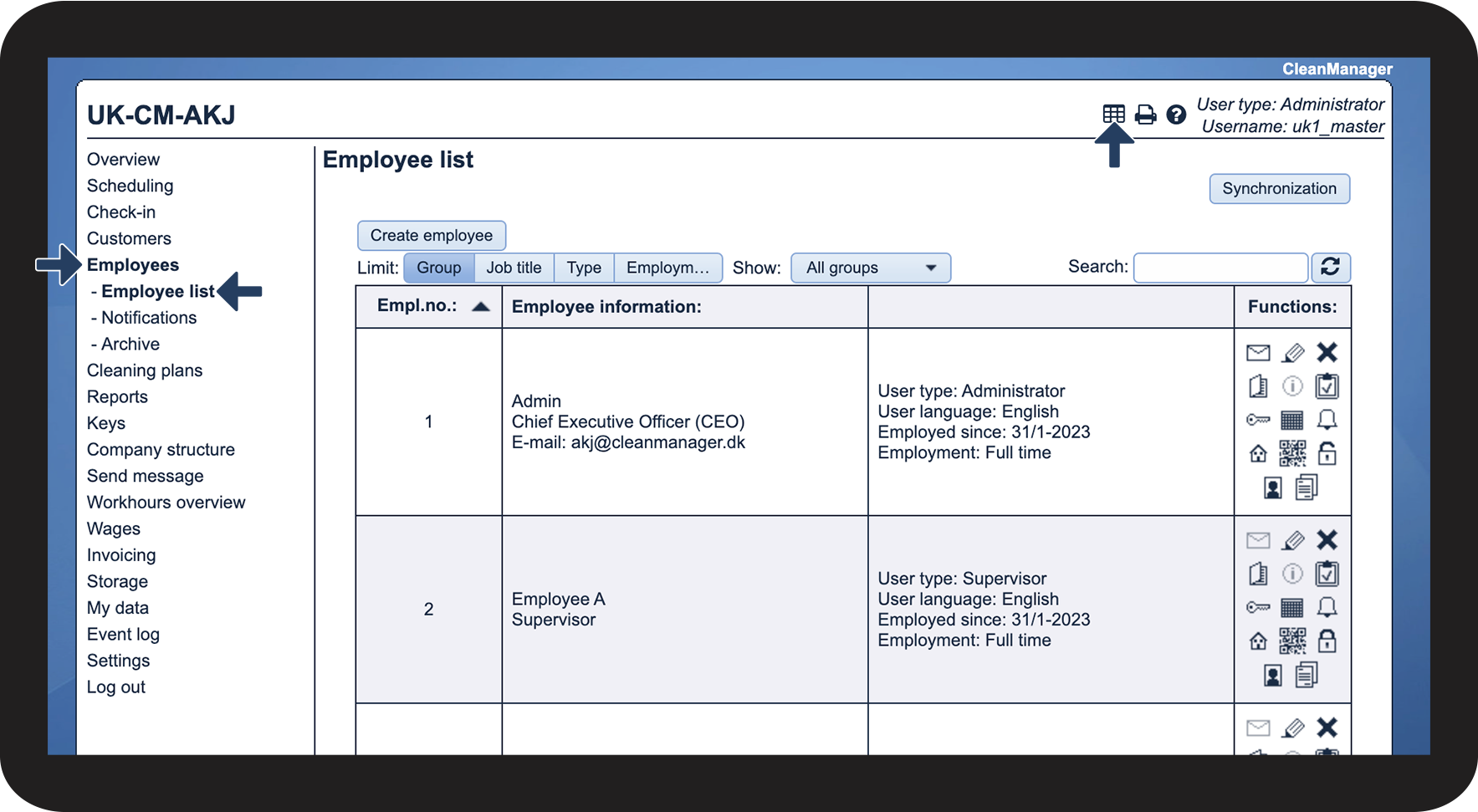
Example:
Here's an example of what the files contain when you download them:

NOTE for CSV files:
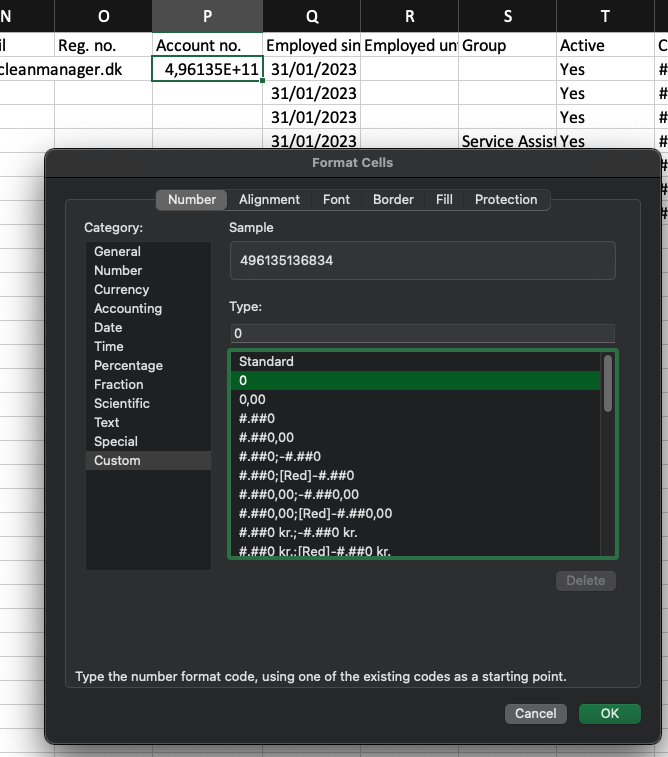
Excel and other spreadsheet programs will truncate long numbers.
This means that they will be rewritten as, for example, 1.235E+09.
To change this before saving your CSV file, you need to format the cells.
Select the required cells, right-click on them, and select Format Cells.
You can then select the Custom category and set the type to include the necessary amount of 0's/numbers (in this case 13) to ensure that the numbers are transferred correctly during export.
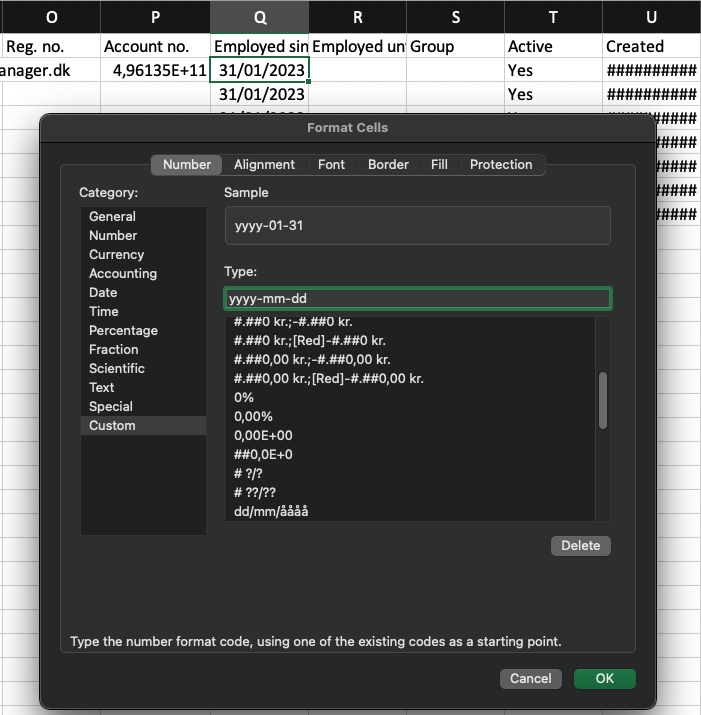
Spreadsheets will also want to change Dates.
To ensure that the dates can be imported correctly using CSV files, these must be formatted correctly.
Select the required cells, right-click on them, and select Format Cells.
You can then select the custom category and set the type to be formatted to yyyy-mm-dd, which will rewrite a date to e.g. 2020-01-20 so that it can be imported.
Once you have prepared your spreadsheet and exported it in XLSX or CSV format, you can start your synchronization process.
You can now import and synchronize your employee data:

You can also learn more about how synchronization works here: